Jake Hayutin was a commercial real estate broker working for industry giant CBRE in Los Angeles when the Covid-19 pandemic hit in early 2020. Not even two months into the job, his career came to a halt as the market hit a dead stop and CBRE closed all its offices worldwide.
However, as uncertainty swirled, Hayutin saw the watershed event reshaping the country as an opportunity in the making. After studying how and why hundreds of thousands of people were moving from one state to another, he decided people would keep moving from densely populated urban cores, where infection and lifestyle restrictions were the most extreme, to suburban locales with less density, lower risk of infection and fewer restrictions.
He was determined to succeed in the new normal and to do it by himself.
“I felt the timing was right to take the jump and put my skills and experience to their highest and best use by starting my own firm focused on helping small businesses and private family offices,” said Hayutin, founder and CEO of Tampa-based Laconic Capital Advisors. “I also felt that Florida was going to be the primary beneficiary of the dramatic changes in demographics and so far, that thesis has been proven right.”
In over 10 years of experience that included being an investment sales broker for two of the nation’s largest firms and spearheading property acquisitions for one of the country’s leading institutional fund managers, Hayutin had completed more than $400 million of transactions.
Since starting Laconic Capital Advisors in 2021, Hayutin has used his prior experience in both brokerage and acquisitions to focus on middle-market investment sales and acquisitions advisory with an emphasis on valuation accuracy and by developing property specific sales processes that generate more offers in a shorter period. He works with the full spectrum of investor profiles on transactions typically ranging from $3 million to $30 million.
“I have found my niche,” Hayutin said.
Boutique brokerages on the rise
Hayutin is among a wave of commercial real estate professionals who have left big companies to start small firms. Boutique real estate firms have become more common as clients no longer have to choose between the personalized service of the local boutique or the power of a large national firm.”
“Technological advancements and the emergence of commercial real estate data providers have enabled individual brokers to access information they couldn’t have gotten on their own before. So more investment sales brokers from the large shops have spun off into their own companies with their own specialties, especially in the last 5 to 10 years,” Hayutin said.
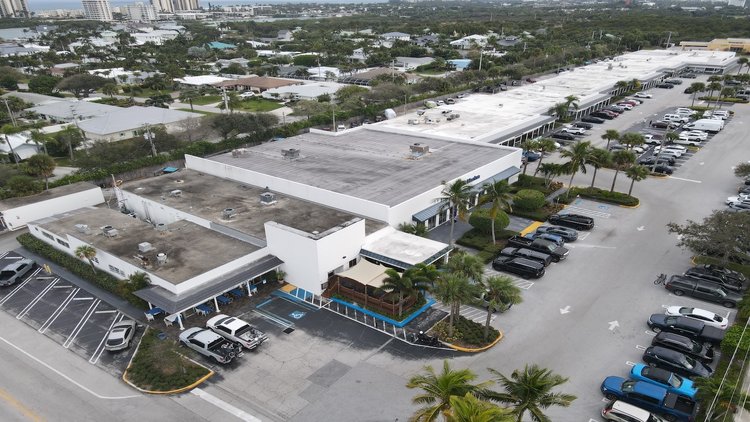
Boutique firms run by experts often have a competitive advantage. For example, in March 2024, Laconic Capital Advisors sold Tequesta Village Square in Palm Beach County for more than the $20 million asking price by generating 23 bona fide offers through Hayutin’s stringent sales process and network of contacts.
“I drove to Delray Beach a dozen times over two years to meet with the family that owned the property and educate them on how large shopping center companies look at properties and how macro factors like interest rates and other costs affect buyers,” Hayutin said.
He also kept generating offers after getting the six or seven at which many brokers would have stopped, particularly if they worked at a big shop with sales contents and other competing priorities, Hayutin said.
“The difference is being diligent and doing everything you said you would do and to keep going after getting two or three reasonable offers, as opposed to pushing the seller to accept one and moving on to your next assignment,” he said.
Selling Tequesta Village Square, a 75,000-square-foot coastal neighborhood shopping center on 6 acres, in less than four months was a flagship deal for Laconic Capital Advisors. “More offers in a shorter time leads to better results,” Hayutin said.
The transaction also exemplified how investors want to buy open-air shopping centers because rental rates are accelerating as foot traffic increases. Open-air, neighborhood strip centers have greatly out preformed investor expectations over the last five years, according to Hayutin. Daily need, service and entertainment-based retailers largely have done much better than anyone would have expected in 2020.
2018 to 2019 “saw a ton of large P.E. (private equity)-backed retailers go through bankruptcy and the Covid lockdowns made things worse,” Hayutin said. “So by the end of 2021 the risk-adjusted returns offered by this niche of retail started, and has continued, to be very appealing – especially in the eyes of larger retail property investors who previously only focused on grocery-anchored shopping centers, the most-sought-after product.”

Florida’s strengths overcome capital market challenges
Hayutin expects increased deal flow in 2025 and 2026. “Despite the Federal Reserve’s recent cuts to the federal funds rate, interest rates on loans for commercial and residential real estate have remained elevated. This is not the typical correlation and has made market conditions more difficult to navigate for both investors and brokers,” he said.
“South Florida in general, including Tampa Bay, Orlando, Palm Beach County, Broward and the Miami-Dade County metropolitan area, will continue to outperform other markets nationwide. The massive influx of positive demographic trends will continue to lift values despite the inflationary factors on capital, insurance and the construction side of the equation. Many other markets across the country, particularly those where there has been net out-migration of people and businesses, will experience all the negative factors without the benefits we continue to see throughout Florida,” he said.
For a free consultation, contact Laconic Capital Advisors at 813-370-0953 or jake@laconiccapital.com.